THE GROOVE
Fast wiggles, high notes
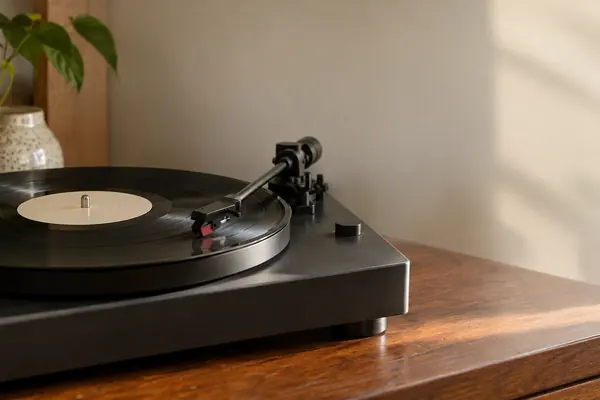
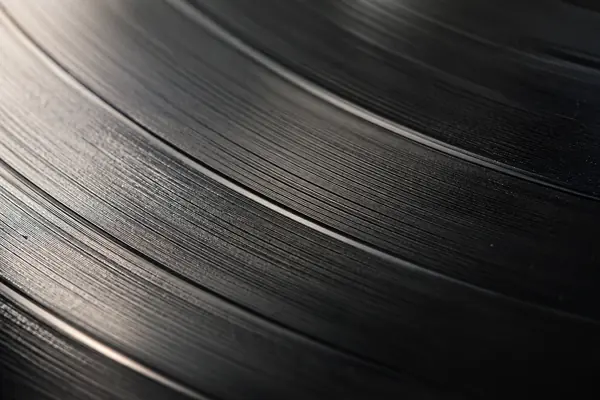
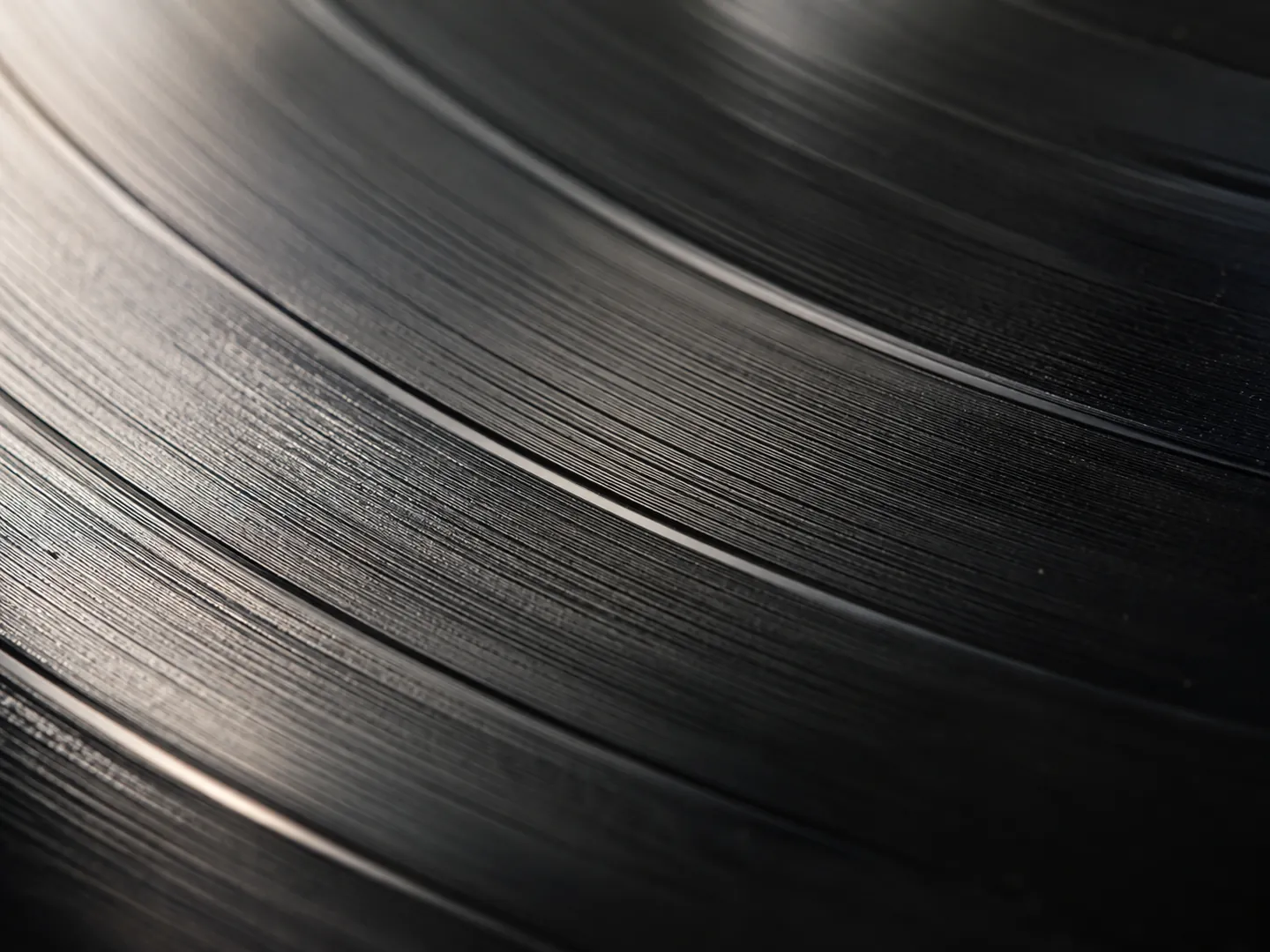
The Library of Congress explains that a stylus moving fast side to side makes higher sounds, and moving further makes louder ones.
See the numbers doodlerecord
WHAT THE ARCHIVES SAY
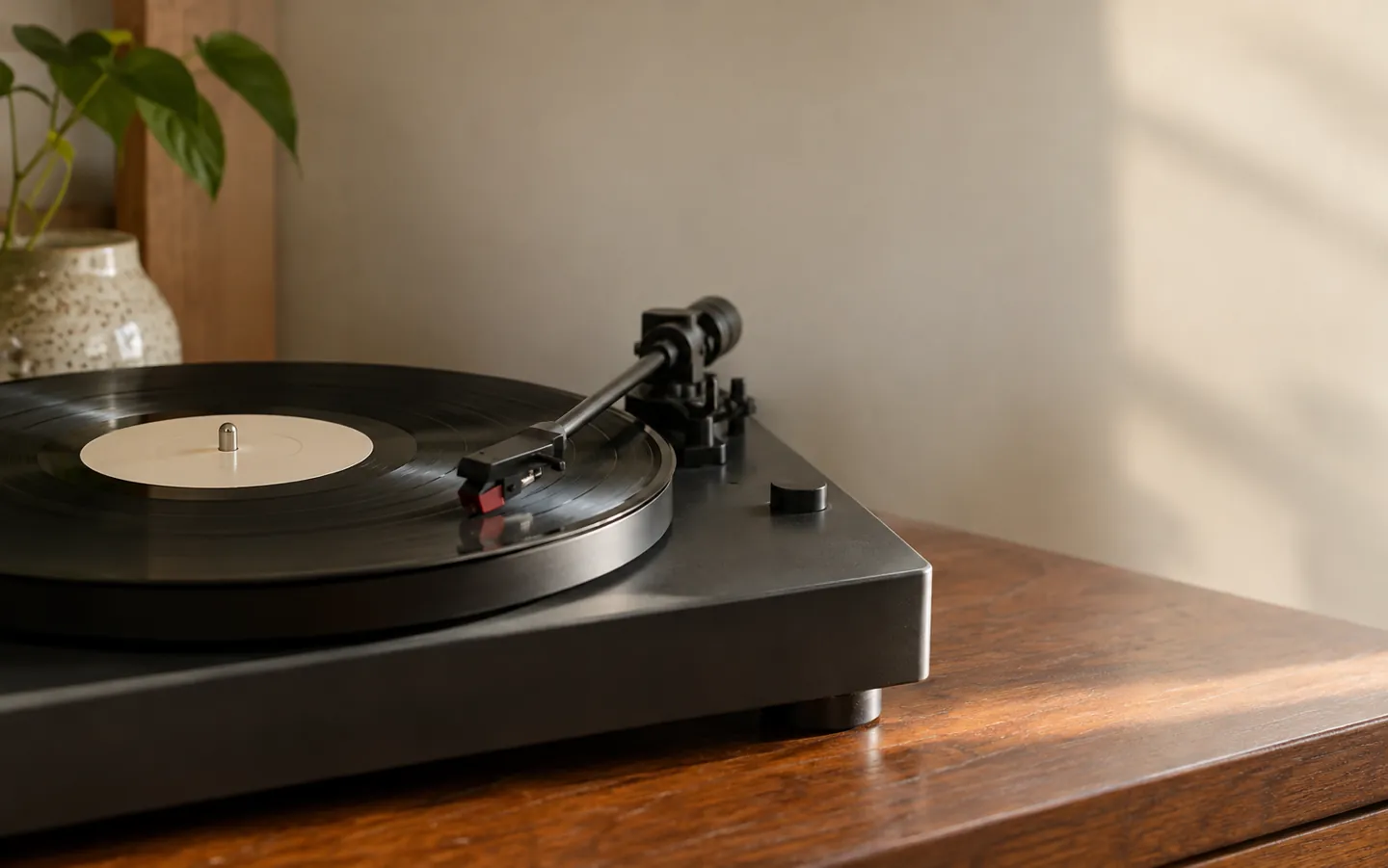
Every record is one long wiggle.
Sound was turned into motion and cut into a groove. Play it back and a stylus rides that groove, shaking as it goes, and the shaking becomes sound again. Library archivists explain how it works and how to keep it safe.
33 · 45 · 78 revolutions a minute
Check your shelfTHE SHORT ANSWER
A groove is a picture of a sound wave.
The stylus reads it by touch.
THE GROOVE
The Library of Congress explains that a stylus moving fast side to side makes higher sounds, and moving further makes louder ones.
See the numbersTHE SPEEDS
Shellac 78s came first. Columbia launched the 33 1/3 rpm LP in 1948 and RCA Victor its 45 rpm record in 1949.
A short historyCARE
Handle records by the edge and label only, store them on edge, and keep them cool, dry and away from radiators.
Check your shelf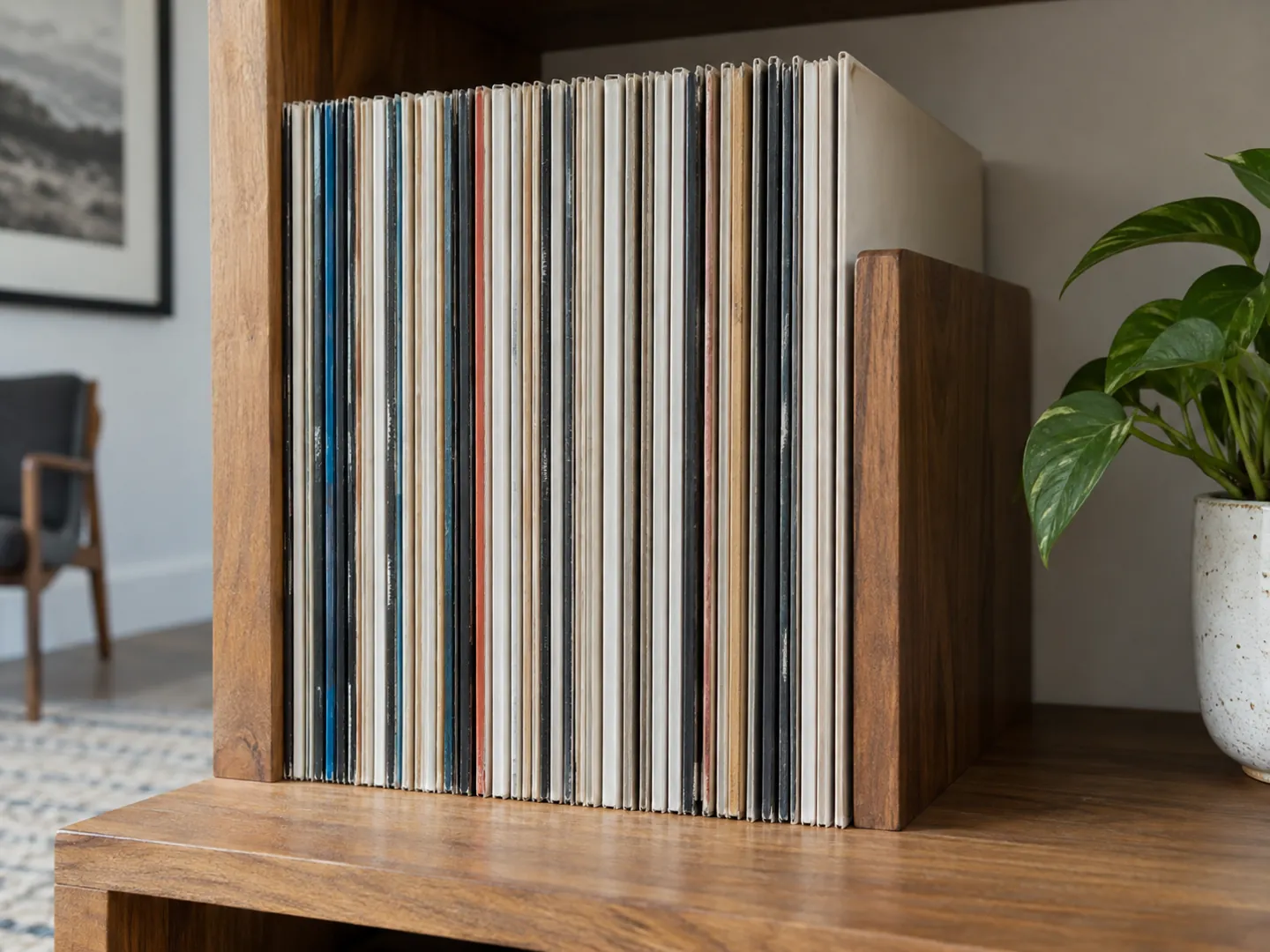
FOUR HABITS FROM THE ARCHIVES
These come from the Library of Congress guide for audio collections. None needs special kit.
Then hold the record by its edge and label only, never the playing surface. Keep food and drink away.
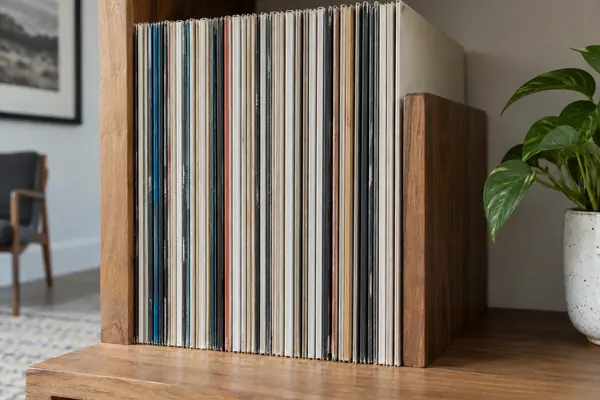
Stand them upright on sturdy shelves, with dividers every 4 to 6 inches so they do not lean.
For home collections the guide suggests room temperature or below and about 35 to 40% relative humidity, away from radiators and strong light.
For dust on grooved discs, the guide suggests canned air, and keeping the playback equipment clean and well maintained.
TWO NUMBERS WORTH KNOWING
How long one side played,
before and after the microgroove LP.
3–4 min
Playing time per side
Australia's National Film and Sound Archive says shellac 78s were usually 10 or 12 inches across, coarse-grooved, and played for three to four minutes a side.
SHELLAC 78s · NFSA
≈ 23 min
Playing time per side
The Library of Congress says Columbia's first long-playing microgroove record, at 33 1/3 rpm, played for about 23 minutes a side, on a sturdier vinyl disc.
THE FIRST LP · 1948
The Library of Congress notes that the key change was the microgroove itself, not the speed or the material. Columbia's 1949 catalogue claimed about six times as much music as conventional shellac records.
A QUICK SHELF CHECK
Pick how your records are kept to see what the Library of Congress care guide says. The bar shows how far that is from what the guide recommends.
Based on the Library of Congress guide to the care, handling and storage of sound recordings. General information for home collections.
A SHORT HISTORY
Shellac 78s were made roughly from 1897 to 1960. They were heavier and more brittle than vinyl, and the speed only settled at 78 rpm in 1925; before that, discs ran at 70 to 90 rpm. The same year, microphones began to replace the big recording horn.
In June 1948 Columbia launched the 33 1/3 rpm long-playing record on vinyl, and in 1949 RCA Victor introduced its 45 rpm format. Most discs are cut laterally, side to side, though vertically cut discs were also sold.
Questions
The Library of Congress explains that sound waves were turned into motion and cut into a soft material as tiny movements in a groove. On playback a stylus rides the groove and vibrates with those movements.
Shellac discs settled at 78 rpm in 1925 after running at 70 to 90 rpm. Columbia's 1948 long-playing record used 33 1/3 rpm with a fine microgroove, and RCA Victor introduced its 45 rpm format in 1949.
Shellac discs have a much rougher surface than vinyl. The Library of Congress notes that this roughness is linked to more noise on playback.
Upright. The Library of Congress says to store discs on edge on sturdy shelving, with dividers every 4 to 6 inches, and not to mix different disc sizes.
The Library of Congress guide does not call for gloves. It says to wash and dry your hands thoroughly and handle grooved discs by the edge and label areas only.
Updated
ABOUT THIS NAME
doodlerecord.com is part of the DoodleSale portfolio. It isn't in an auction right now, but you can ask about leasing it.